SHOW CD DETAILS
HyperLink
CD Number [262]
Published [11/12/2008]

The Tale of Kur Oghlu: Discovering Eyvaz
Dotar & Vocals:
Ashegh Aslan

Collected and Researched by: Fozie Majd

Fozie Majd, B.Mus (Ed.), Iranian composer, collected the music of Khorasan, Baluchestan and other regions between 1972 and 1978, a project sponsored by the NIRT. She started, in the NIRT, the "Group for collect and research on regional music" which she headed until August 1980. Meanwhile, she had presented programmes of regional music in the Shiraz and Tus (Mash-had) Festivals of Art, 1973-1978, introducing masters and their original music, which was at that time unknown to the public, and caused great interest and acclaim. The musicians were invited to become members of the "Group for collect..." and received a salary from the NIRT. A collection of six CDs devoted to the recordings of those years, collected by her, including the dotar maghams of Torbat-e-Jam, and the schools of dotar-bakhshi music of Northern Khorasan, as well as the two CD's labelled "Music in Noban and Zar" and Arba'een in Bushehr", all recorded between 1972 and 1978 in their respective regions, have been published by Mahoor. The present CD is the ninth in the series.

Ashigh - Also ashegh - Aslan and the Tale of Kur-Oghlu
Ashigh Aslan was about fifty when the author first met him in Tehran in the spring of 1975. He was already a renowned ashigh, performer of heroic romances, living in the city of Khoy, in western Azarbaijan. We met in one of the studios of the National Iranian Television, and one of the stories related to the famous Kur Oghlu was recorded. We met again, this time in Khoy, in mid septembre of that year, with more leisure to record, in more relaxed and natural settings. Ashigh Aslan owned a coffee shop and performed in the local TV programmes.
The term Ashigh has been suggested to have originated from the avesta word ashu and asha, meaning sacred, and the Turkish language has made it into ashik, ashok, meaning sacred person, which is considered as one of the characteristics of an ashigh. Eshgh, an Arabic word for love, with ashegh in Persian meaning lover, is another suggestion, in this context meaning a lover of God. Ashigh Aslan personally believes ashigh to mean a loves of God and considers his saz, the instrument for praying and speaking to God. However, both semm relevant and can unite for a meaningful conclusion.
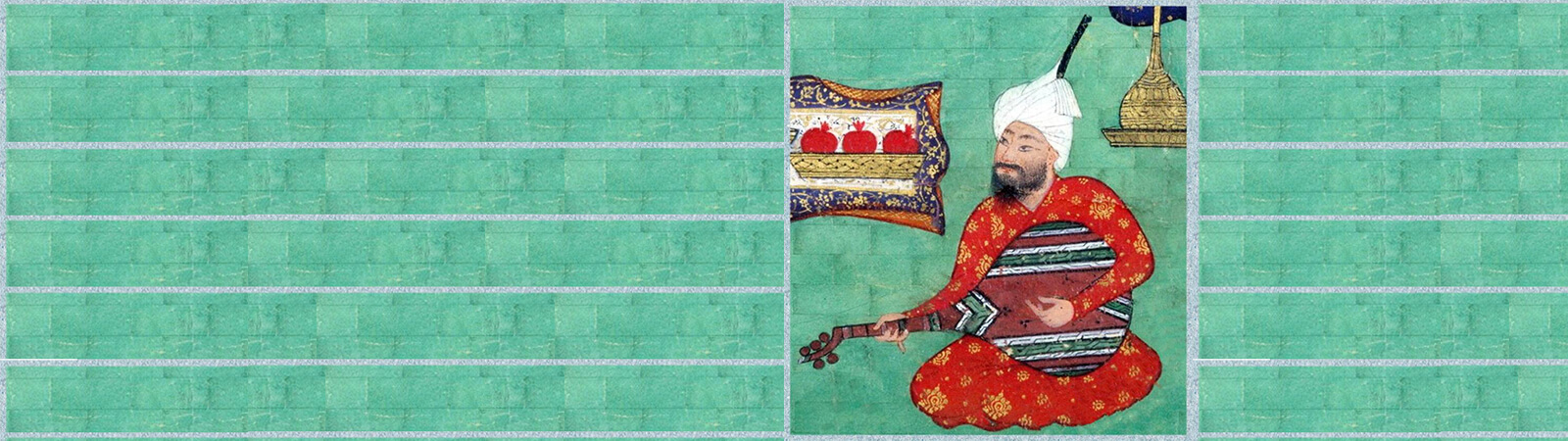
An ashigh is a musician, often also a poet, and performs epic or romantic stories, or romances, speaking the narrative parts, singing the poems and verses, accompanying himself on the instrument saz, or ghopuz, a nine stringed lute played with a plectrum, each three strings tuned to one note. The songs are called hava-s; the number of havas in ashighi music vary, but up to eighty has been suggested, and these fall within the scale structures of three Persian dastgahs: mahur, segah and shur. The ashighs refer to the rhythmic structures of these havas as `epic' rhythms.

The tale of Kur Oghlu
Kur Oghlu - also pronounced Kur Oghli - is considered a legendary hero amongst the Turkish speaking people of Azarbaijan and the Torkamans of north eastern Iran, as well as turks and torkamans of other areas. He seems to have been an historical person, and one of his knights, ashigh Ghorbani, is said to have been in the service of the safavid Shah Esmail (16th century.) Kur Oghlu, as the legend has it, is a valiant warrior-knight, at war against social injustice, a law unto himself, attacking and looting travelling caravans. The tale of his heroic feats and personal life are sung by bards and minstrels, known as ashighs. Kur means blind, and oghlu, son. According to the Turkish version, Kur Oghlu is the son of a blind man whose eyes have been blinded by a despotic master, and the son becomes an avenging rebel. He lives in Chanli-Be-el, where he has built his home high up in the mountains. He is surrounded by valorous knights. Kur Oghlu and his knights are also ashighs and carry their lute even in battle. Many tales have arisen out of his feats and amorous episodes. Thirty are known to have been published. One of these tales, featured in this CD, has been performed by Ashigh Aslan, opening with an episode in praise of Hazrat Ali. ...

Price:  USD 11.99
SHOPPING BASKET
Items: 0
Total: USD 0.00
 
CURRENCY SETTING
Select Currency 
USER LOGIN
 
 
MOST VISITED CDs
HyperLink
Published: [23/09/1983]
HyperLink
Published: [01/09/2008]