Hossein Alizadeh was born in 1951 in Tehran. He studied in the Tehran Music Conservatory as a child and was spotted by Ali-Akbar Shahnazi as a brilliant student. Then he studied with Yusef Forutan, Abdollah Davami, Sa'id Hormozi, Hushang Zarif, Habibollah Salehi and Mahmud Karimi and graduated from the College of Fine Arts in Tehran University. He began his career in 1968 by playing in Rudaki Orchestra directed by Hossein Dehlavi. In 1970 he gave concerts in the famous Center for Preservation and Propagation of Iranian Music under Nur-Ali Borumand. Some of his works were performed and recorded in 1970s in radio programs followed by a period of collaboration with the Ensemble Sheyda, then founding the Ensemble Aref. His activities were always in favor of Iranian music. He has exerted a deep influence on understanding Persian classical music among younger generation. He has introduced new theories and reforms in both improvisation technique and composition. He has founded a new school of his own and has now many followers who, in turn, transmit these improvements.
During 1970s as a sign of political protest he resigned from radio music office together with the other members of both ensembles. Afterwards he founded Chavush Institute in collaboration with Mohammad-Reza Lotfi and by composing numerous memorable hymns he made clear that innovative aspects of Iranian music are actually countless. After the revolution he resided in Europe for a while to study music and again from 1988 he started his career by giving a triumphant concert titled as "Shurangiz" (i.e. Tumult-exciting) which deeply influenced the taste of music-lovers. Alizadeh's released oeuvres include Ney-Nava, Ava-ye Mehr, Raz-o-Niaz, Sobhgahi, Raz-e No, Torkaman, Nava, Homayun
Hejrani, Paykoubi, Rast-Panjgah, Sallaneh, Hamnavayi, Chahargah & Bayat-e Tork, Radif Navazi and he has also composed film music for Delshodegan, Gabbeh, From the Eons Ago, Iran is My Home, Turtles can Fly, and A Time for the Drunkenness of Horses, Under the Cutting Blade. He has taught in the College of Fine Arts, the "Center", Chavush Institute and contributed to the art of Tar and Setar instructing methods by publishing four volumes titled Ten Pieces for Tar. His influence on the players is truly undeniable. Of his latest published works are Setâr Teaching Methodology (Elementary) and Tar and Setar Teaching Methodology (Intermediate).
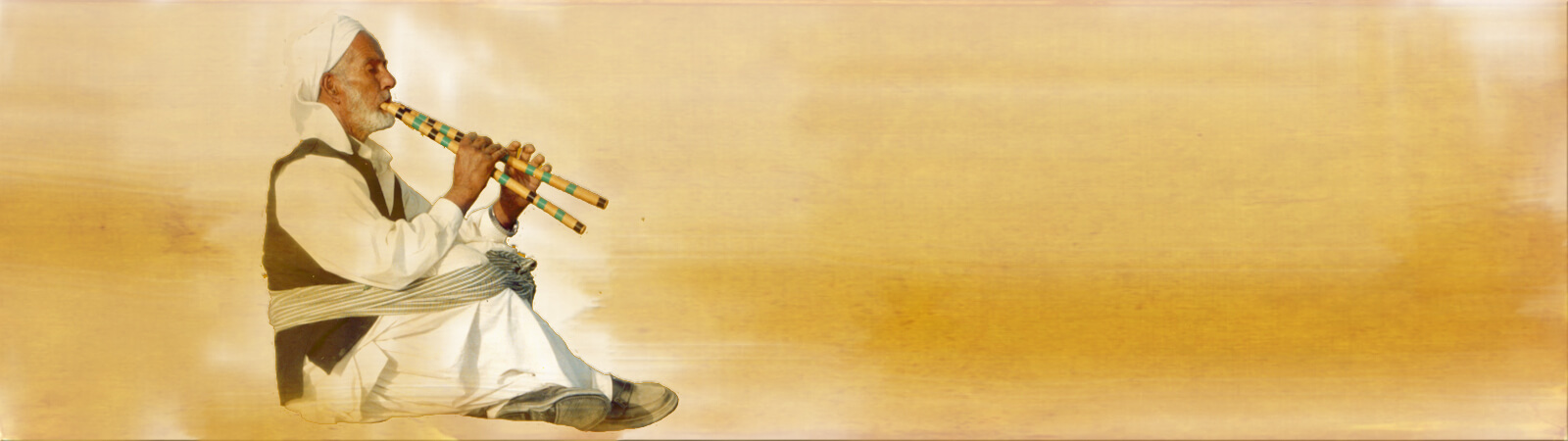
Hossein Omumi was born in 1944 in Isfahan. He took his first lessons in Radif from his father. He was then possessed by the virtuosity of Ostad Kasai, the great Iranian ney player and after a 10-year period of educational efforts he began to study ney with that great master learning the secrets of his technique. He won the first prizes in 2 succeeding ney playing competitions held by the universities of Iran, and at the same time he studied the vocal radif with Ostad Mahmud Karimi. Hoseyn Omumi has given concerts in Rudaki Hall together with many prominent musicians and has made numerous recordings for the Iranian Radio and Television.
Omumi is a graduate of Iranian National University and University of Florence in architecture. He has given lectures on architecutre and on music at the National University, at the College of Fine Arts in Tehran University, at the Center for Preservation and Propagation of Music and also at the National Conservatory. He has resided in France since 1984 and was invited by the Center for Oriental Music Studies related to the Sorbonne University, to teach Persian music. He has also taught the same topic in UCLA. Numerous radio programs and concerts have featured him in European and American countries and also throughout the world.
His researches on the making of ney, tombak and daf were the subject of an educational concert held in 1999 which was very well received by the connoisseurs.
He contributed in the original soundtrack of the Sweet Here After (a prizewinner in Cannes, 1998) directed by Atom Egoyan.
Mohammad Qavi Helm was born in 1951 in Tehran. He was raised in a musical family that nurtured his talents from early childhood. He learned about the different regional musical traditions of his country from his uncle, while receiving his first lessons on percussion music at the age of five from his parents.
He entered the Music Conservatory of Tehran at eleven, where he continued his studies in Persian traditional music and embarked on an apprenticeship in Western classical music. In 1978 he went to France to study with Sylvio Gualda in order to perfect his various repertoires of percussion instruments. Although away from his country, he continued to practice Persian music on his own.
Currently, he hosts seminars on the improvisation on Iranian percussion instruments, and teaches Western percussion music at the Conservatories of Palaiseau, Ince, and the Ecole Nationale de Bourges. Qavi-Helm has played with many prominent masters and musicians of Iran. He is both a recording artist and a concert musician who has appeared at festivals and concerts throughout Europe, the United States, and Asia.