SHOW CD DETAILS
HyperLink
CD Number [143]
Published [09/10/2003]

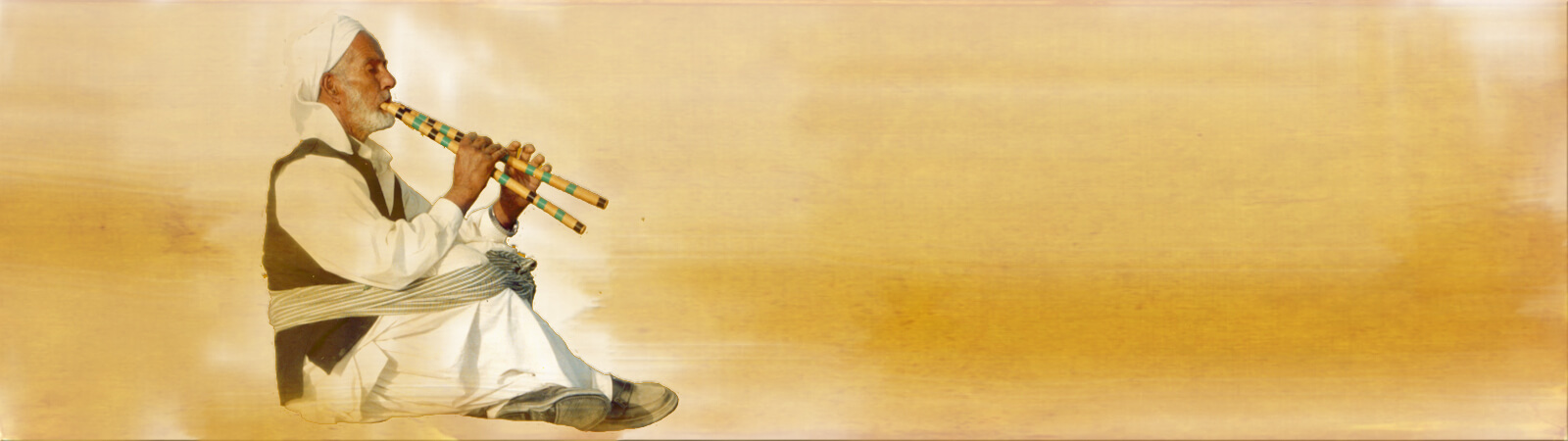
Sorna: Heshmat Saadati
Qoshme: Mohammad Asheq Qarakhani
Vocals: Abdolali Damanjani
Kamanche & Dohol: Qorban Baqeri

Collected & Researched by: Mansureh Sabetzadeh

Kormanji Dances from Northern Khorasan
Like the old Khorasanian, Kormanji Kurds refer to dance as bazi, an ancient term derived from Pahlavi vacik. In their merry making the old and the youth, men and women, the rich and the poor all participate, and their dances narrate their nomadic life, life struggle, unity and their love for mocking death and reminding us of their glorious ancestors, those who considered many worthy of happiness and love.
Kormanji people migrated from Kurdistan to Northern Khorasan some centuries ago. They have come under the influence of Khorasan, though they speak their native language. Their folk dances seem mostly like the round dances of Khorasan and are to be performed in sequence. First dances are lento and as the group proceed they are intensified and accelerated. Dance rounds start and re-start after several interruptions following the previous pattern, in order to provide the dancers with a relaxing break.
Hands play a major role in the ritual dances and they show a greater diversity of movements when compared with feet movements. Snapping one's fingers in a consecutive manner is among the prominent characteristics of Kormanji dances.
Kormanjis, when dancing, do not usually tie their hands together or put them on shoulders. Instead they used to perform group movements separately. They form a circle which intermittently comes close together and then blooms out, a process known as Gol-o-Ghoncheh (lit. flower-and-bloom), during which semi-circled movements and twisting of the wrists all add to the beauty of their dances. Yodelling is quite common and stepping excite both dancers and visitors. The audience invited usually gather around the dancers and clap their hands. Any dancer who feels fatigue retires and is replaced by another fresh dancer. There are separate men and women dance circles, much seen especially after the Islamic Revolution. While the musicians are playing tirelessly, men circles are replaced by those of women and vice versa. Previously men and women used dancing together (known as salt'n'pepper). However, there is not any major limitation for women to participate in the ritual folk dances, except for chub-bazi a totally man-driven sport and dance. Surprisingly enough, some 80 years ago even in chub-bazi women also participated, and nowadays there are some old women who could play the sport like men.
In their nomadic tents one usually witnesses women dancing and prancing together, while a group of native musicians in a corner (almost out of the tent) play sorna and dohol. Women wear colorful veils known as "peacock feathers" while dancing. The dances actually belong to all these people regardless of their age and sex. Improvisation corresponds to dance maqams like all other regional music of Iran and also its neighboring countries. ...

Price:  USD 11.99
SHOPPING BASKET
Items: 0
Total: USD 0.00
 
CURRENCY SETTING
Select Currency 
USER LOGIN
 
 
MOST VISITED CDs
HyperLink
Published: [23/09/1983]
HyperLink
Published: [01/09/2008]