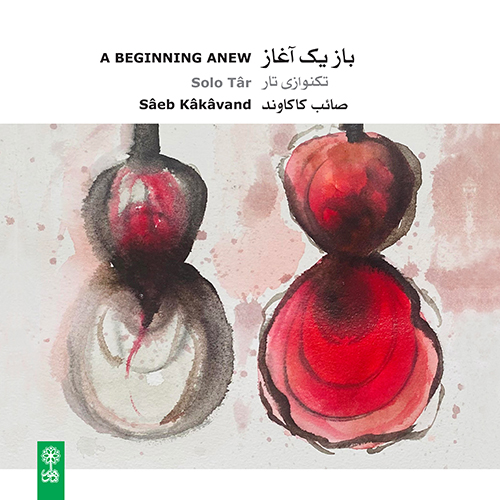
SHOW CD DETAILS
HyperLink
CD Number [278]
Published [21/08/2009]

Tracks & Artists

1-Biya ta gol barafshanim (Abdullah Naziriev)
2-Emruz shah-e enjoman (Shungar Adinebg)
3-Ruz-e vasl-e dustdaran (Abdullah Nazirev)
4-Saba be lotf begu 1 (Bay Muhammad Niazi)
5-Agar an tork-e shirazi (Abdunazar Hasanov)
6-Saba be lotf begu 2 (Maruf Khaje Bahador)
7-Saqiya barkhiz (Bay Mohammad Niyazi)
8-Motreb-e khoshnava (Abduljalil Hashimov)
9-Tab-e banafshe (Nasiba Uzakova , Arifa-Nisa Ghafur)
10-Gol dar bar (Hasan Sayid Qasimov)
11-Man tark-e eshqbazi (Batchebeg Shabegov)
12-Eysham modam ast 1 (Sanavar Londokov)
13-Eysham modam ast 2 (Nobovar Chanarov , Shanbe Palaev)
14-Dush didam ke malaek (Abdorauf Sahebi)

Recording & accompanying notes by: Jean During

Hafez in Tajikestan
This CD gathers a dozen of songs; what they all have in common is that they were collected in Tajikestan and were composed around poems by Hafez.
In Iran, Hafez is always sung in classical and free-metered style and rarely in that of a fixed-metered song (tasnif, tarane). (There are however a few specimens such as the tasnif on the poem Del miravad ze dastam or Tab-e banafshe...) Hafez is rarely sung in a fixed-metered genre essentially because the "modern" Persian tasnif is almost always composed with contemporary poems that easily adapt to the melody and rhythm. It is much more difficult to impose complex music and poetry with a regular meter )bahr( upon each other. Therefore, paradoxically, classical Persian songs are rarely set to classical poems.
In the traditions of Transoxania, on the contrary, almost all classical and semiclassical songs use poems by great authors ancient and modern, Uzbek and Chagatai )such as Nava'i, Fuzuli, Hoveyda, Mashrap(, and Persian (Rudaki, Saadi, Hafez, Khayyam, Khojandi, Bidel, Amir Khosrow, Layiq, etc.). There also exist two traditions of free and fixed-metered song, comparable to the Persian style (radif); one is Uzbek and learned (katta ashula, set to Uzbek poems), the other Tajik and popular (falak, set to nonclassical verse). In both genres, the freedom to improvise is rather limited, and the music of Transoxania, as well as that of the Uigur, is generally composed of vocal and instrumental forms that are firmly established. The creativity is not expressed through improvisation but in arrangement and composition. The result is an abundance of works of quality that can be very original while conforming to the traditional style. ...

Price:  USD 11.99
SHOPPING BASKET
Items: 0
Total: USD 0.00
 
CURRENCY SETTING
Select Currency 
USER LOGIN
 
 
MOST VISITED CDs
HyperLink
Published: [23/09/1983]
HyperLink
Published: [01/09/2008]