Bakhtiyari Dances
Known to stem from Lurs and named Great Lur after the 4th century Hejira (Iran's Central Tribes, Javad Safinejad, P.103), Bakhtiyaris are one of the most ancient tribes and nomads in Iran. Herodotus supposed them to be the earliest Iranian ancestry who, within the 6th and 7th centuries B.C., dwelled at the foot of Bakhtiyari mountains, east of Shushtar, and on the two sides of karun river and then mingled with Elamites, the other natives of the land (An Introduction to the Knowledge of Tribes, Iraj Afshar Sistani, P.454). Today, Bakhtiyaris' territory encompasses the province of charmahal Bakhtiyari together with parts of Isfahan, Lurestan, Kohkiluye Boyer Ahmedi, Fars, and Khuzistan provinces (Iran's Comprehensive Georgraphy, Rabi' Badi'I, Vol. 1, P.77; Fundamentals of the Sociology of Tribes, Heshmatollah Tayyebi, P. 321); and their language has its roots in Pahlavi that itself, due to the geographical circumstances of its territory, for long remained intact (Iran's Comprehensive Geography, Vol. 1, P. 76; An Introduction to the Knowledge of Tribes, P. 489). The name Bakhtiyari was stated in the historical source books of the 8th century Hejira (The Selected History, Hamdollah Mostowfi, P. 541); and some have considered it to be a combination of "Bakht" and "Yar" [these two words denote "fortune" and "firend" respectively] with reference to Bakhtiyaris' help to Safavids in the achievement of vitory in war, while others believe it to have originated from Bachteria (Greek) or Bakhtarian (Westerners) (History of Bakhtiari, Sardar As'ad Bakhtiyari, P.5; Bakhtiyari Dictionary, Abdol'ali Khosravi, P.62; An Introduction to the Knowledge of Tribes...) or from the name of the tribe Bakhtiyarvand P.173). Probably, after Safavid era, this tribe was parted into two groups of Haft leng (Durki, Behdavand, Dinarani, Bab babadi, Se Dehestani, Janaki; all have a summer territory, south of the area, with greater population and rather more poverty-stricken) and Chahar leng (Mohammad Salehi, Moguyi, Kondolru, Meymund, Zolaki; with a summer territory, north of the area, with less population and rather more wealthy). Here, "Leng" denotes the "mare's limb" andalso a "tax unit", and plus relates to the four and seven leaders son of Bakhtiyaris by a couple from two distinct territories (Tribe of Lurs, Sekandar Amanollahi Baharvand, P. 185) or comes from Avestan, meaning "river" (Bakhtiaris' Music and Songs, Kazem Pure, footnote, P. 16).
Throughout the Iranian history, Bakhtiaris have been brave and warlike people. As examples of this, mention should be made of their participation in the battle against Afghans in 1134 Lunar Hejiran which led to Afghans' defeat, the presence of their leaders in Nader's and Karim Khan's military, their protest against Aqa Mohammad Khan, and involvement in the Constitutional Movement (Iran's Central Tribes, Javad Safinejad, P. 109). Traditionally, Bakhtiyaris' tribe is known to be composed of a few divisions named as: Qesmat, Tayefe, Tire, Tash, Owlad (Korbu), Behun (Khanevar). Along with bravery, Bakhtiyaris are renowned to be great gunmen and hunters, skilled in husbandry and, above all, possess such hospitality that right upon the entrance of any guest into a bride's tent they rush to him kissing his hand welcome and putting his hands on their forehead and eyes as a sign of dedication (manifesting the highest hospitality of the host).
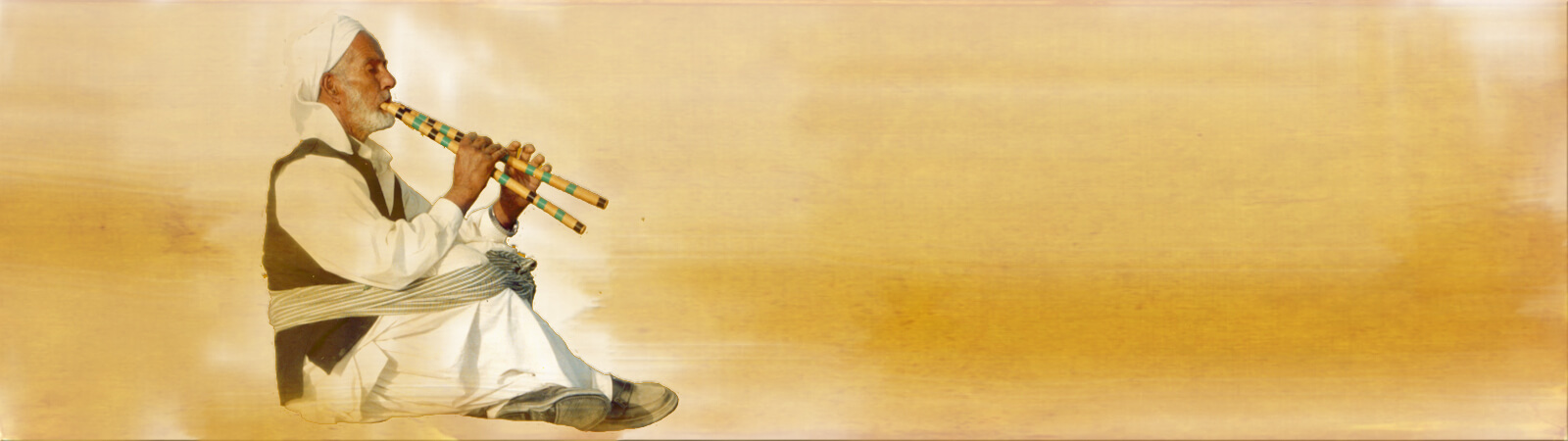
Brides are commonly covered with a long white veil (chador) overall having a colored handkerchief (doaq) sewed on it. Then, riders rush to the scene passing ahead of the bride's white tent (symbol of marriage) and shooting, dohol and karma (Musical Instruments) players, namely Tushmal, come and play along the dance group. Men and Women dance in two separate groups (Wheat and Barely) coming together from time to time to dance jointly. Amongst the joy and excitement raised by shaking colorful handkerchiefs, ornamented sequins, women and girls clap and play dayere [an Iranian membranophone instrument] singing songs like Hana-Hana, Dayne, Ahay Gol, Yaram Ey Gol and putting henna on bride's and groom's hands. Tushmals start playing the melody of Tarke bazi [a dance played by two men holding two sticks in their hands] as soon as men with rods in their hands appear on the dance area fighting a symbolic fight and attempting to overpower the other. Then, replacing these men, comes a group of women in colorful, joyous and brilliant dresses joining the other in a circle, shaking handkerchiefs (Dastmal bazi) and rounding to purge the whole tribe from the evil, wicked and dark and bring light and color to it. The bride and the groom turn round the fire set before the bride's chamber (Hejlegah or Dorghun) together three times, the act that symbolizes the sanctity of fire in Aryan beliefs and rites; they step into the bride's chamber (Hejle) with the right foot (Choqakhor or Bazoft) representing the weight of rightness and purity amid Iranian ancestral religions and rituals. Upon the entry, Tushmal performs a particular tune, Dovar Pa Raste vardar (girl, put your right foot) and hey Rou Hey Rou (a custom from the tribe of Monjezi); meanwhile, three eggs are tossed to the tent's post (one to the yard's gate and two to the Hejle entrance, in rural areas) and a handkerchief stuffed with toasted rice, wheat and pastry (poshtqay) is tied to the bride's waist (Bibi Talla Yadollahi, Dah Cheshme). ...